
Reef Fishing Charter Sydney: What to Know Before You Book
Reef fishing charter in Sydney? Check licences, bag limits, reef closures and operator questions before you book, using NSW DPI as your source.
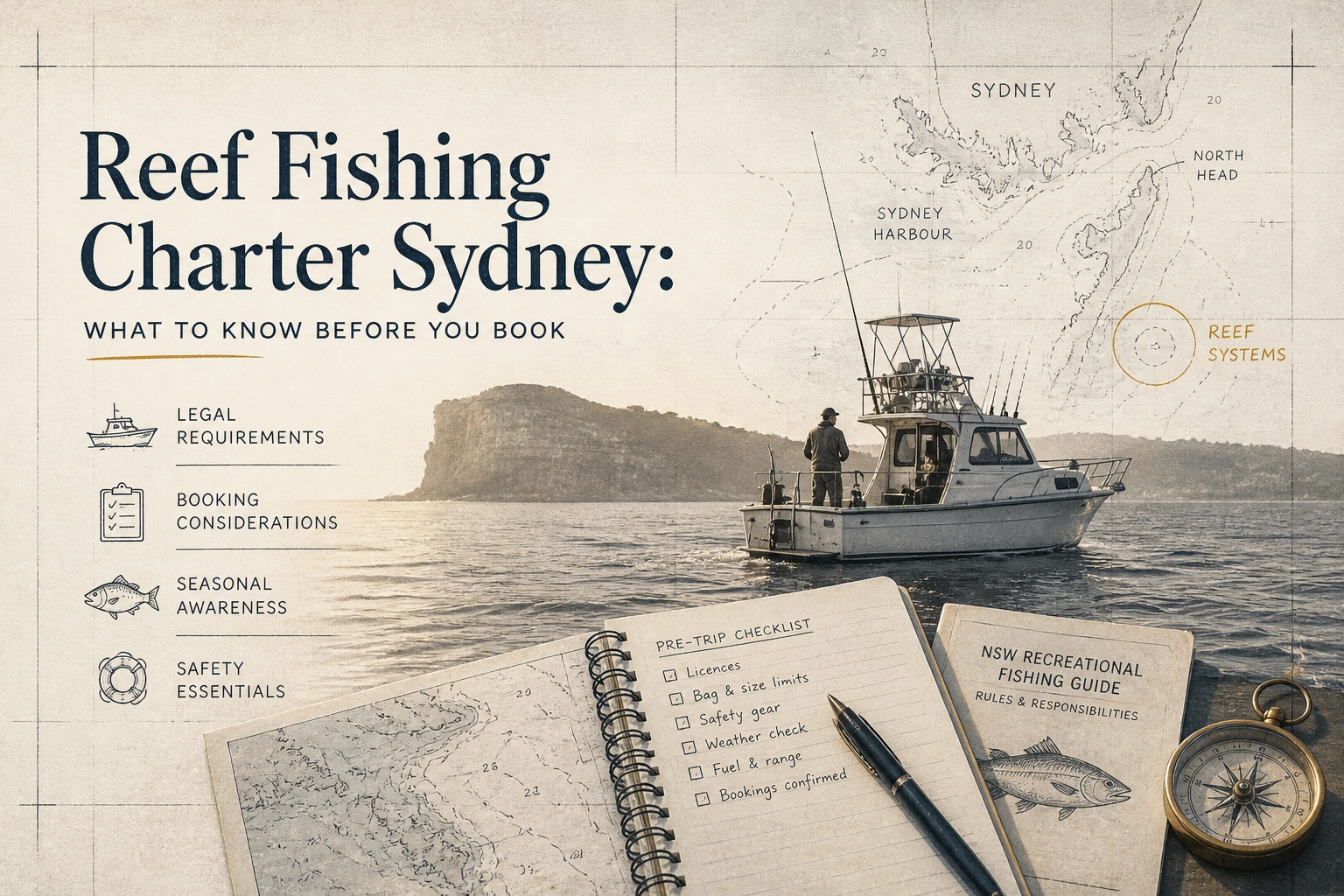
If you are searching for “reef fishing charter sydney,” the decisions start before you pay a deposit. Sydney's reef grounds offer exciting opportunities, but licence requirements, bag limits, closures and charter-specific declarations all shape what you can legally catch and keep. Get those details right and your first trip is far more likely to be safe, compliant and enjoyable.
This tutorial is written for beginners who want clear, authoritative guidance before they book. You will learn what a Sydney reef fishing charter actually involves, whether you need a fishing licence, and how charter bag limits and declared charter fishing activities apply. We explain reef closures and protected species to check, plus the proposed 2026 NSW rule changes, including Eastern Blue Groper line-fishing prohibitions and new demersal bag limits, and why DPI NSW should always be your final reference.
You will also see how to choose a reef charter, what first timers, kids and families should expect, and how to compare options and book through fshntrp.au. We finish with common questions and your next step to a day on the reef.
What a Sydney Reef Fishing Charter Actually Involves
 What a Sydney Reef Fishing Charter Actually Involves
A reef fishing charter in Sydney is straightforward: a licensed operator runs a skippered boat that carries paying passengers out to fish structure, the rocky bottom, ledges and reefs in the waters off the city. You do not need your own vessel, tackle or local marks.
A typical day generally starts with a safety and rules briefing at the dock, then a run out through the heads. Most of the trip is spent drifting or anchoring over reef before returning in the afternoon. Most operators offer half day, full day and night options.
Reef trips differ from other Sydney charters. Offshore game and trolling trips chase pelagics in open water; estuary charters work the harbour and river system. Reef fishing targets fish that hold on structure. The same trip-type distinctions shape charters elsewhere, such as fishing charters in Broome and Darwin's reef and harbour trips.
This suits first timers, families, visitors and boatless locals, because rods, bait, ice and the skipper's local knowledge are usually supplied.
Trip length, departure wharf, passenger numbers and target species all vary between operators and seasons, which is why this guide focuses on what to check rather than who to book.
Do You Need a Fishing Licence on a Sydney Charter?
Licensing is not optional for most anglers. A 2026 state-by-state guide from a camping retailer reports that NSW and Victoria require a recreational fishing licence for all fishing, unlike states where only certain waters or methods need one. That same guide reports a three-day NSW licence at roughly $7, but its publication dates conflict, so treat the figure as reported only and confirm current fees and terms on the NSW DPI site.
The guide also states that under-18s need no licence in NSW or Victoria. Verify that with DPI rather than a third-party summary, and buy direct from the state government.
One question remains unresolved: whether a charter passenger needs their own licence or is covered by the operator's arrangements. Ask your operator plainly, then confirm the position with NSW DPI before you book. If you are still comparing trips, our guide to Fishing Charters in Sydney: Which Trip Fits You Best? covers what else to check.
Charter Bag Limits and Declared Charter Fishing Activities
Bag limits are the next thing to lock down, and charter fishing sits in its own legal category. The Fisheries Management (General) Regulation 2019 includes a section on declared charter fishing activities, so limits aboard a charter can differ from those for private fishing.
One sourcing note: the FAO-hosted PDF copy of that regulation is marked for automatic repeal on 1 September 2024, so use the live NSW legislation instead.
Limits are typically set per person and per species and can cover what you hold on board as well as what you keep, so staying within them is usually the responsibility of both angler and skipper. Confirm the exact position with your operator and NSW DPI.
Demersal species, the bottom-dwelling fish reef anglers target most, were reported to have new bag limits among 2026 amendments. Verify with NSW DPI before relying on it.
Because charter limits are a distinct category and numbers shift with amendments, ask your operator which limits apply to your trip. Check the NSW DPI recreational and charter fishing pages for current numbers. The same discipline applies elsewhere, as our Fishing Charters Adelaide: What to Expect and How to Book guide shows.
Reef Closures and Protected Species to Check Before You Go
Closures change more often than any other part of the rulebook. They include seasonal spawning closures, specific reef and headland closures, and temporary restrictions announced at short notice.
Treat the NSW DPI fishing closures page as your authority, and check it in the week before the trip, not at booking. A law firm's guide reports a 2026 Eastern Blue Groper line fishing prohibition. This reef associated species is a direct concern here, but the only source is that marketing page, so confirm it against a live NSW DPI notice before relying on it.
The NSW Recreational Fisheries Monitoring Program is reported to be able to trigger bag limit or closure adjustments relatively quickly. That is why linking out beats quoting a snapshot of the rules.
Some species are protected or no take, meaning they must be released regardless of size. Operators normally brief passengers on what to return during the trip briefing.
Save or screenshot the closures page before boarding. Offshore reception is patchy, so the skipper's word should not be the only reference point. Planning further afield? Apply the same discipline when choosing fishing charters in Port Douglas.
What the 2026 NSW Rule Changes Mean for Reef Anglers
In 2026, a law firm's guide to NSW fisheries amendments reported new demersal bag limits and a described stricter enforcement environment. Treat that as a signal, not a rulebook. The source is a marketing page published by a law firm, and it cites a penalty figure we could not verify, so it does not appear here. Nothing in it should be read as the regulation itself, and anything reported only by that firm deserves hedging until confirmed.
The practical conclusion: rules move faster than blog posts are updated. This guide is a starting point, while NSW DPI's fishing rules and regulations is the authority. Because changes can be tied to ongoing fisheries monitoring, a patch of reef that was legal to fish last season may carry different limits this season.
A well run NSW charter operator fishes under the same rules you do, so asking the skipper about current limits and closures is normal preparation, not nervousness. It is also worth doing before booking elsewhere, such as Perth fishing charters for beginners, families and pros, where different limits apply.
How to Choose a Reef Fishing Charter in Sydney
With the rulebook settled, the next job is choosing the operator. Work through this checklist before you pay a deposit.
Confirm licensing and limits. Ask whether the boat is licensed to carry paying passengers and whether the trip runs as a declared charter fishing activity under NSW rules, then ask which limits apply on the day.
Get inclusions in writing. Rods, reels, bait, tackle, ice, and whether you keep your catch. Inclusions vary widely, and a cheaper fare sometimes excludes gear hire.
Match the trip to the reef. Ask whether it targets reef structure specifically or a mix of reef and open water, and whether the boat drifts between spots or anchors up.
Check logistics. Departure wharf, boarding time, trip length and travel time to the ground. A full day that spends three hours under way feels very different from a half day on nearby reef.
Ask about passenger numbers. Deck space, tangles and crew attention per angler all depend on boat size and how many berths are sold.
Confirm the weather and cancellation policy in writing. What happens if the skipper calls it off: refund, credit or reschedule, and how much notice you get.
Test beginner friendliness. Will crew rig lines, bait hooks and unhook fish? Is there sheltered seating if someone needs a break?
Read recent reviews for what listings omit: how crew treated first timers, whether the advertised trip matched reality, and how cancellations were handled.
Shortlist two or three operators using the same questions, so you compare like with like rather than booking the first listing. Weighing a northern reef trip too? Fishing Charters Cairns QLD: Reef, Estuary and Game Trips shows how those days differ.
First Timers, Kids and Families on a Reef Charter
Once you have shortlisted operators, the family questions matter most. A camping retailer's 2026 guide reports that anglers under 18 do not need a licence in NSW, which removes one barrier, but confirm the current position with NSW DPI before you rely on it. Ask each operator about minimum ages, supervision rules and trip times, since some reef trips run later than a young child will enjoy.
Set expectations honestly. Charter reef fishing is usually bait fishing or simple jigging over structure, and beginner friendly crews generally help with rigging, baiting and unhooking. Treat seasickness as the main risk to a first trip going well, and choose a half day, a larger boat and a swell check as sensible first timer defaults.
Bring sunscreen, a hat, non marking shoes, food, water and warm layers, then ask what the operator supplies before buying gear. Finally, tell the operator your experience level when booking so you are matched to a suitable trip, whether that is a Sydney reef charter or one of the Melbourne fishing charters covered elsewhere.
Comparing Reef Charters and Booking Through fshntrp.au
Once you know what to ask, the question becomes where to find operators. fshntrp.au is a directory that connects customers with charter operators and guides, starting in Australia with plans to expand worldwide.
It is a browse and enquiry layer, not an operator. You can see which reef fishing charters and guides list in Sydney and the surrounding region, then apply the checklist above to shortlist and make contact.
Be aware of what this article can and cannot do. The source material behind it contains no Sydney operator names, no prices and no availability data, so nothing here names, ranks, reviews or prices a charter.
Use listings to gather candidates, then confirm licence position, bag limits, closures and safety details directly with the operator and with NSW DPI.
A listing starts a conversation. The operator's booking terms, safety briefing and the current DPI rules govern the trip. The questions below settle the remaining details.
Reef Fishing Charter Sydney: Common Questions
Before you contact a listing, here are the questions worth asking.
Do I need a licence to fish on a charter? NSW generally requires a recreational fishing licence, but whether a charter passenger needs their own or is covered by the operator must be confirmed on the NSW DPI charter fishing page. Ask DPI rather than relying on an unverified answer.
Do kids need a licence? A 2026 state by state guide reports under 18s do not need a licence in NSW or Victoria. Confirm current terms with NSW DPI, and check the operator's minimum age rules.
Where do I buy a NSW licence? Buy directly from the state government through the NSW DPI licensing page.
How many fish can I keep? Charters fall under declared charter fishing activities with their own limit arrangements, and 2026 reportedly brought new demersal bag limits. Ask the skipper what applies on your trip and check current NSW DPI rules.
How do I know if a reef is closed? Use the NSW DPI closures page, the authoritative source for seasonal, area based and temporary restrictions. Check it again in the days before you travel.
Do I need my own rod and bait? That varies by operator. Ask before booking whether rods, reels, bait, tackle and ice are included, and whether you keep your catch.
Your Next Step to a Day on the Reef
Three things decide whether your day out wide goes well: the right operator, a clear picture of what is included, and an up to date read on NSW licensing, bag limits and closures.
Turn this guide into a to do list. Check the NSW DPI licensing and closures pages. Ask the operator which limits apply to your trip, and confirm inclusions, departure point and the weather policy before you pay a deposit.
Then take that checklist to the reef fishing charters and guides listed at fshntrp.au.
Finally, an honest reminder: rules change. Treat this article as a starting point, and NSW DPI plus your chosen operator as the final word on the day.
Conclusion
Rules and limits change, so treat NSW DPI as your final reference on licensing, bag limits and closures before every trip. When you are ready, browse reef fishing charters and guides in Sydney and beyond at fshntrp.au.