
Fishing Charters in Darwin: What to Know Before You Book
Compare Darwin fishing charters for barra, reef and bluewater trips. See what a licensed NT operator must hold and enquire direct.
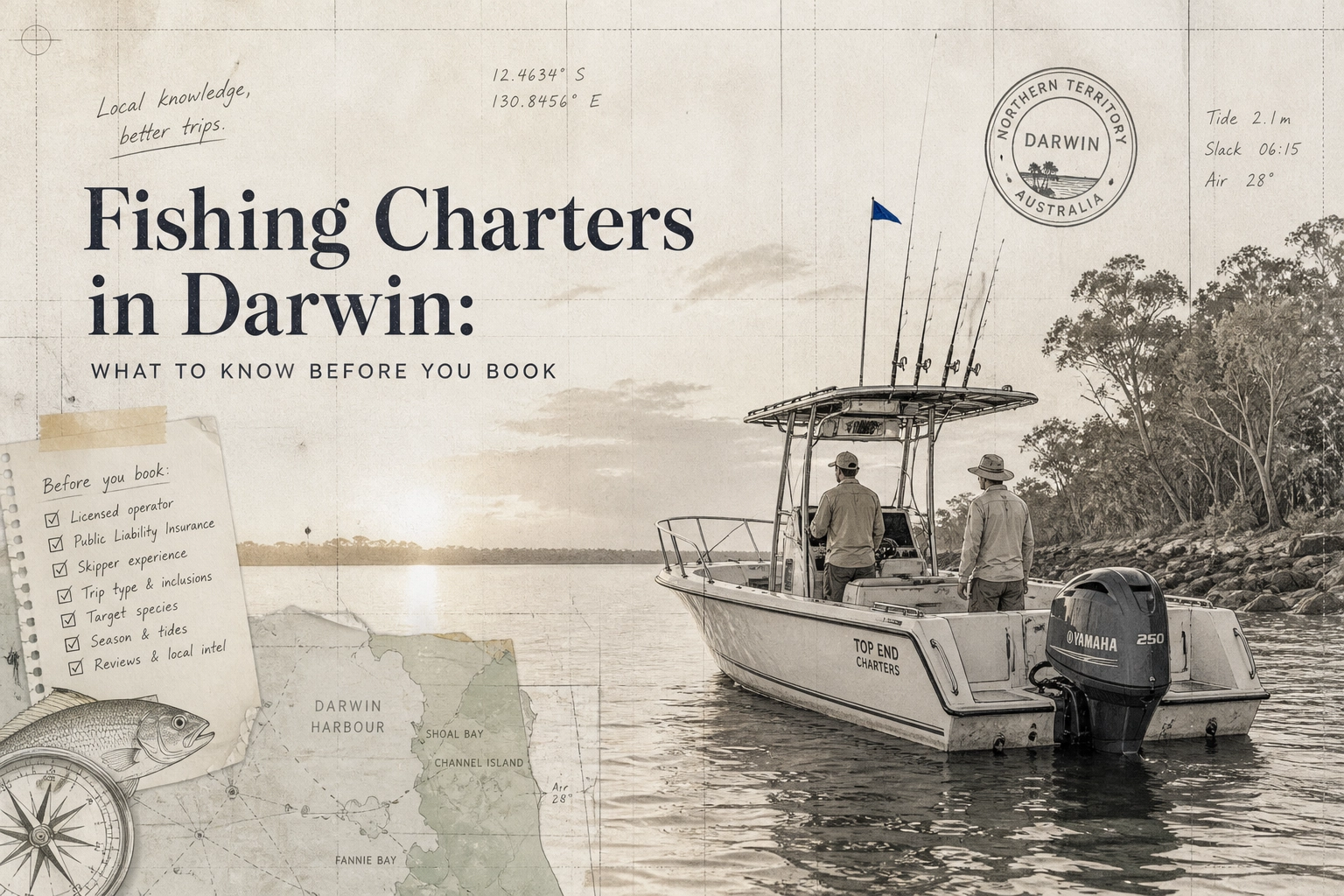
So you're heading to Darwin and dreaming of that iconic barramundi strike, or maybe a screaming reel out on the bluewater? Before you hand over your credit card, it pays to know what makes fishing Darwin charters different from a casual day out. This isn't just about hiring a boat. It's about licensing, local knowledge, tides, weather, and the right trip for the experience you want. Licensing is mandatory for commercial guided fishing tours in the Northern Territory, and operators must meet strict requirements around insurance, first aid, vessel compliance and trip logbooks. There is also a pending change to the FTO process, so checking credentials early is smart.
In this listicle, we'll cover Fishing Charters in Darwin at a Glance, then break down Barramundi and Estuary Charters: Half and Full Day Options. We'll look at Harbour, Reef and Bluewater Charters, and Extended, Remote and Multi Day Charters. You'll also learn How to Choose a Licensed Darwin Charter Operator, Catch Rules, Limits and What Guests Can Keep, and What Is Included, What to Bring and How to Prepare. We'll answer Fishing Charters in Darwin FAQs and finish with Next Steps: Compare, Verify, Then Book.
Fishing Charters in Darwin at a Glance
In the Northern Territory, anyone taking paying guests fishing must hold a fishing tour operator (FTO) licence and an approved operator card. That card confirms the holder is a fit and proper person. Without both, they have not met the NT Government's requirements to operate commercially. This is your first buyer filter.
Quick-pick table
Operator | Best for | Typical trip | Departure point | Price from | Licence & insurance checked |
|---|---|---|---|---|---|
[From fshntrp.au] | Barra, reef, bluewater, remote | Half to multi-day | Darwin | $$$ | Yes/No |
On mobile, shortlist two or three operators by trip type and group size first, then enquire. Don't ring six operators in one afternoon. Prices are ranges, not absolutes. Trip length and distance from Darwin drive most of the cost. Confirm "price from" with the operator at booking. The final column shows whether we've checked those details against the operator's fshntrp.au listing. Use the table to shortlist, then read on for what each trip type involves.
Barramundi and Estuary Charters: Half and Full Day Options
Once you've shortlisted by trip type using the table above, the barra and estuary option is the classic starting point for Darwin charters. These trips work the harbour arms, creeks and coastal flats, usually over half a day to a full day, with small group sizes so everyone gets a real shot at the fish. A few things to confirm before you pay a deposit:
Inclusions. Rods, reels, tackle, bait, ice and esky space are commonly provided; food, drinks and personal gear often are not. Ask for the inclusion list in writing.
The tide factor. NT charters are planned around tide movement, not clock time. Departure times shift daily, so a 5am or 2pm start is normal rather than a scheduling error.
Seasonality. It varies by operator and location. Ask which months each operator targets barra and what worked in the past two seasons, instead of trusting a generic "best time" answer.
Guest catch rules. Everyone on a charter fishes under recreational rules. NT bag and size limits apply, and your catch cannot be sold or bartered.
 Harbour, Reef and Bluewater Charters
If barra and estuary trips suit your crew, the reef and bluewater fleet is the next step up. These charters head to deeper grounds and fish with heavier tackle, and the target species shift with the season. Trip lengths vary by operator and grounds, confirm duration when enquiring, so expect to plan your day around the operator's schedule.
To filter options as an intermediate angler, check each listing for four things: target species, whether gear and bait are included, how many anglers share the boat, and whether the skipper stays on the grounds all day or returns to the wharf early. A boat that fishes the full session usually offers better value than one that docks at lunchtime.
Weather and wind drive scheduling in the Top End. Wind against tide can make offshore grounds uncomfortable or unsafe, so good operators build flexibility into their plans rather than guaranteeing a specific reef on a specific day. Expect a call the evening before if the forecast turns.
Use the harbour and reef category pages on fshntrp.au to compare departure points and trip lengths side by side instead of reading one listing at a time.
Vessel compliance matters here too. Ask the operator whether their vessel holds current AMSA survey certification. That is a useful question to ask before you book.
Extended, Remote and Multi Day Charters
Once you have ticked off the reef and bluewater day trips, some anglers start looking further afield. Multi-day and remote charters may use live-aboard vessels or lodge-based formats, confirm the setup with the operator. Expect correspondingly higher price points and longer lead times, so book well ahead.
This format suits returning anglers chasing less pressured water, groups booking together, and travellers who want the trip itself to be the holiday rather than one activity within it. The reward is more time on the water and fewer boats around you.
Access rules can differ on Aboriginal land and waters, so ask the operator whether the itinerary requires any permit and who arranges it.
Check what the multi-day price includes: meals, accommodation, transfers, bait, ice and tackle. Confirm the cancellation terms as well, because weather can change an itinerary mid-trip and leave you renegotiating rather than fishing.
fshntrp.au lets you filter Darwin charters by trip type, so multi-day options sit alongside day trips instead of being buried in a separate search.
How to Choose a Licensed Darwin Charter Operator
Licensing and insurance requirements are covered in the Glance section above, here is how to apply those checks at the operator level.
If transfers are included, check the road side too. Vehicles collecting guests need NT Motor Vehicle Registry accreditation, tourist vehicle registration, and an H endorsement on the driver's licence.
Operators must also submit a logbook return for every commercial guided trip. That signals a regulated operation rather than a casual side arrangement.
A senior first aid certificate is also part of the licensing requirements. Ask the operator whether their vessel holds current AMSA survey certification. Those are fair questions to raise before you commit.
Ask these before you pay a deposit:
The FTO licence number and the operator's full name
An approved operator card
A $10 million third-party liability insurance certificate
Senior first aid and marine qualifications
Vehicle accreditation, tourist registration and H endorsement details if transfers are included
One caveat: pending changes to the FTO process have been flagged by the NT Government. Verify current requirements by calling Fisheries Licensing on 08 8999 2183 (confirm this number on the NT Fisheries Licensing page before calling, as contact details may have changed) before booking.
Catch Rules, Limits and What Guests Can Keep
Beyond recreational rules already noted above, here is the full limits picture for Darwin charters:
The general possession limit is 15 fish outside your permanent residence, with tighter personal limits on barramundi (5), golden snapper (3), black jewfish (2) and king threadfin (3). Barramundi must be at least 55cm, or 27cm as a fillet.
Catch cannot be sold or bartered. If you encounter an operator offering you a share of the catch or a cash-for-fish arrangement, that falls outside the rules.
Access rules for Aboriginal land and waters are separate from fishing rules. If your itinerary crosses those boundaries, ask the operator who holds the relevant permission before you book.
The NT Government's fishing tour operator page is the place to check the current licensing position. For anything the page doesn't answer, call Fisheries Licensing on 08 8999 2183 (confirm this number on the NT Fisheries Licensing page before calling, as contact details may have changed). Requirements are changing, so treat any detail as a snapshot, not permanent.
What Is Included, What to Bring and How to Prepare
With the catch rules clear, the next step is knowing what you get for your money and what to pack.
What's usually included. A properly equipped Darwin charter typically provides a skipper and deckhand, rods, reels and tackle, bait, ice, and all required safety equipment. Confirm inclusions in writing before paying a deposit, as this varies by operator. Food and drinks vary: some operators include them, others ask you to BYO. If a listing is vague on any of these, treat it as thin and confirm before you pay a deposit.
What to bring. Sun protection, a wide-brim hat, non-marking shoes and a light long-sleeve shirt. Bring seasickness tablets if you're prone, and pack a soft bag rather than a hard esky. The money-saving detail most travellers miss: rods and reels are usually supplied, so you don't need to buy gear for a single trip. Confirm inclusions in writing before paying a deposit, as this varies by operator. Chasing bluewater species? Ask in advance whether heavier setups are available.
Questions to send before booking. Departure time, meeting point, whether transfers are included, group size, target species that week, and cancellation terms. Rather than ringing six operators in one afternoon, send these through the fshntrp.au enquiry form to several Darwin operators at once and compare the replies side by side.
Fishing Charters in Darwin: FAQs
Preparation questions sorted? Answers Darwin charter customers ask most.
Do Darwin charters need a licence?
Yes, see the licensing checklist in How to Choose a Licensed Darwin Charter Operator above. For current FTO requirements, contact NT Fisheries Licensing (confirm this number on the NT Fisheries Licensing page before calling, as contact details may have changed).
How much does a Darwin charter cost?
Prices vary by trip type, length and distance from the wharf, so treat published figures as "price from" and confirm with the operator. Our directory listings let you compare like with like rather than guess.
When is the best time to charter fish in Darwin?
No single answer covers every target species. Ask operators directly which months suit your target species, and confirm departure times when booking, schedules vary by operator and conditions.
Can I keep my catch?
Guests fish under recreational rules, so NT bag and size limits apply. Catch cannot be sold or bartered. If keeping fish matters, ask what the crew does with the catch at trip's end.
Is a charter suitable for beginners or families?
Many Darwin operators run small-group trips for first-timers, and crews typically handle rigging and baiting. Check minimum ages and group sizes in the listing before enquiring.
What about Aboriginal land or remote areas?
Access rules can differ from general recreational fishing rules. Ask the operator whether the itinerary needs a permit and who arranges it.
Next Steps: Compare, Verify, Then Book
With those answers in hand, here's how to move from research to a booking. Shortlist by trip type first: estuary and barra, harbour and reef, or extended and remote. Compare within that group, not across the whole fleet. It's easier to weigh a half-day barra trip against another half-day barra trip than against a multi-day remote charter.
The full pre-deposit checklist is in the How to Choose section above. In addition: confirm inclusions, departure details and cancellation terms in writing.
When you're ready, browse the Darwin charter listings on fshntrp.au to compare options in one place. If you run a charter business, list it there too, so customers can find a licensed operator instead of an unlicensed one.
Conclusion
Booking a Darwin fishing charter comes down to matching the trip to your group, then checking the operator behind it. Start with the type: estuary and barra, harbour and reef, or extended and remote. Within that group, compare inclusions, departure details, and cancellation terms. Do the checks outlined above, then book with confidence.